On this page 10 sections
- How much vitamin B6 is in JellyGlow Gummies?
- What does 143% NRV mean on the JellyGlow Gummies label?
- What form of vitamin B6 do JellyGlow Gummies use?
- What does vitamin B6 do in the body?
- What is the JellyGlow Gummies vitamin B6 claim?
- Is 2 mg of vitamin B6 under the upper limits?
- Can too much vitamin B6 cause nerve problems?
- Who should ask a doctor before taking JellyGlow Gummies?
- What can we not confirm about vitamin B6 in JellyGlow Gummies?
- FAQ
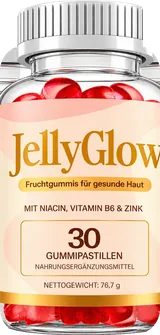
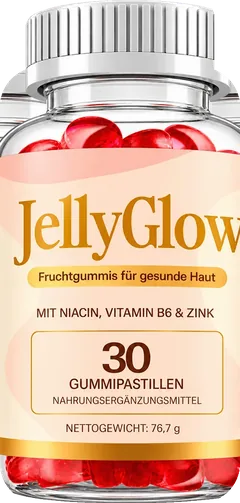
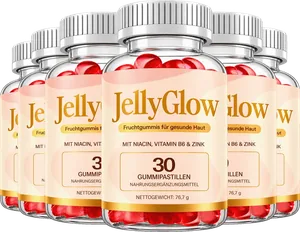
JellyGlow Gummies vitamin B6 is 2 mg per gummy, supplied as pyridoxine hydrochloride and printed on the label as 143% of the EU Nutrient Reference Value. This page covers where that number comes from, the EU wording the sales page uses for vitamin B6, and how 2 mg compares with the EU and U.S. upper limits.
How much vitamin B6 is in JellyGlow Gummies?
Each gummy contains 2 mg of vitamin B6, and the suggested use is one gummy a day. The label prints this in its Nutritional Information table, and the official JellyGlow sales page lists the same amount1.
The label shows the amount as 143% NRV. The EU adult Nutrient Reference Value (NRV) for vitamin B6 is 1.4 mg2. Our math: 2 ÷ 1.4 = 1.43, so the label's percentage checks out.
For comparison, the U.S. National Institutes of Health Office of Dietary Supplements (NIH ODS) says adults aged 19 to 50 need 1.3 mg of vitamin B6 a day3. One gummy lists a little more than either reference figure. Many people already get vitamin B6 from food, so ask your doctor or pharmacist whether a supplement adds anything for you.
| Reference point | Vitamin B6 amount | Source |
|---|---|---|
| One JellyGlow gummy | 2 mg | Label |
| EU adult NRV | 1.4 mg | 2 |
| U.S. daily need, adults 19–50 | 1.3 mg | 3 |
| EFSA adult upper limit | 12 mg a day | 4 |
| U.S. adult upper limit, all sources | 100 mg a day | 3 |
You can compare vitamin B6 with the other two label nutrients on our niacin page and zinc page.
What does 143% NRV mean on the JellyGlow Gummies label?
It means one gummy lists 143% of the amount the EU uses as its adult reference for vitamin B6 on food labels. It is a labelling yardstick, not a target you need to beat.
The NRV system lets you compare products side by side. The EU rules give 15% of the NRV as the general guide to a "significant amount" of a nutrient2, and 143% is well above that line. A figure over 100% is common on supplements and does not by itself mean the amount is high or low for you.
What the percentage cannot tell you:
- how much vitamin B6 you already get from your diet;
- whether you need any extra vitamin B6 at all;
- how the amount fits with other supplements you use.
Only a look at your full diet and supplement list, ideally with your pharmacist, can answer those. The percentage also says nothing about any outcome from JellyGlow Gummies.
| Nutrient | Per gummy | U.S. limit (NIH) | EU limit (EFSA) |
|---|---|---|---|
| Niacin (nicotinamide) | 25 mg | 35 mg: 71% | 900 mg: 2.8% |
| Vitamin B6 | 2 mg | 100 mg: 2% | 12 mg: 17% |
| Zinc | 1.5 mg | 40 mg: 3.8% | 25 mg: 6% |
Sources: NIH ODS fact sheets and the EFSA summary of upper levels (2025). The U.S. niacin limit covers both supplement forms; the EU sets separate limits. Other supplements add to these totals.
What form of vitamin B6 do JellyGlow Gummies use?
JellyGlow Gummies use pyridoxine hydrochloride, which is how vitamin B6 appears in the label's ingredient list. It is the only vitamin B6 ingredient listed.
Pyridoxine hydrochloride sits near the end of the ingredient list, after zinc citrate and before Panax ginseng extract. EU labels list ingredients in descending order of weight2, so vitamin B6 is a tiny part of each gummy. Each gummy weighs about 2.56 g (76.7 g ÷ 30, our math), and the 2 mg of vitamin B6 is a small fraction of that.
The full list, in label order, is on our ingredients page. The largest parts of each gummy are glucose syrup, water and sugar, because they come first.
Order
JellyGlow Gummies packages and prices
Prices when we checked on November 25, 2026; confirm on the official product page. We do not repeat the page's comparison figures. The buy buttons we checked pointed to a placeholder checkout link, so order links here open the official JellyGlow product page.
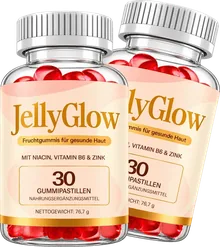
2 jars
60 gummies · about 60 days at one a day
$79per jar, incl. VAT
- Total
- $158
- Per gummy
- $2.63
- Shipping
- $20 shipping
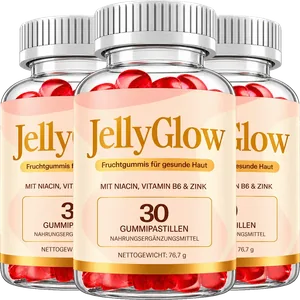
3 jars
90 gummies · about 90 days at one a day
$69per jar, incl. VAT
- Total
- $207
- Per gummy
- $2.30
- Shipping
- Free shipping
6 jars
180 gummies · about 180 days at one a day
$49per jar, incl. VAT
- Total
- $294
- Per gummy
- $1.63
- Shipping
- Free shipping
- Check the delivery countryThe shipping page names Germany only. Ask the helpdesk first if you live elsewhere.
- Pick a package2, 3 or 6 jars of 30 gummies, with VAT. The 2-jar package adds $20 shipping.
- Pay through Digistore24The seller says it is a one-time payment, no subscription. Read the total before you pay.
- Save the order emailIt holds your order ID. The 30-day guarantee counts from the day the jars arrive.


 Badges supplied by the seller (German originals). What each one means is explained on the guarantee page.
 Card logos come from the seller's pack; the official pages name no payment methods. Order links are marked sponsored. Ask your doctor first if you take medicine.
What does vitamin B6 do in the body?
NIH ODS says vitamin B6 is needed for more than 100 enzyme reactions in the body3. That is a general description of the nutrient, from a government fact sheet, not a statement about JellyGlow Gummies.
Here is what that means for this page:
- It explains why vitamin B6 is classed as an essential nutrient.
- It does not tell you what one gummy will do for you.
- It does not mean more vitamin B6 is better. NIH ODS warns about long-term high doses (see below)3.
We found no study of JellyGlow Gummies. Any research on vitamin B6 studied the vitamin on its own, usually at different and often far larger amounts, not this product.
What is the JellyGlow Gummies vitamin B6 claim?
The official JellyGlow sales page uses this EU wording, word for word: "Vitamin B6 contributes to the reduction of tiredness and fatigue."1 That sentence is on the EU list of permitted health claims5.
Three points help put it in context:
- It is on the sales page, not the label. The label prints only one health statement, the niacin skin sentence. The vitamin B6 sentence is used by the seller online1.
- It describes the nutrient. The EU wording is about what vitamin B6 does. It is not a promise about how you will feel after taking JellyGlow Gummies.
- It is a fixed wording. EU rules allow the sentence only for foods that are at least a "source of" vitamin B65. We do not reword it, and we do not repeat other wording the sales page uses about vitamin B6.
The seller also says individual results may vary1. If you are often worn out, see your doctor: it can have many causes, and a supplement is not a substitute for a check-up. Our EU health claims page lists all five EU sentences connected to the gummies.
Is 2 mg of vitamin B6 under the upper limits?
Yes, 2 mg is under both the EU and U.S. adult upper limits. The EU limit is the stricter of the two.
The European Food Safety Authority (EFSA) sets the adult upper limit for vitamin B6 at 12 mg a day4. One gummy uses about 17% of it (2 ÷ 12, our math), which leaves about 10 mg of room before you count other supplements.
NIH ODS gives the U.S. adult upper limit as 100 mg a day from all sources3. One gummy is 2% of that (our math).
The label says: "Do not exceed recommended dose." These comparisons assume one gummy a day, as the label directs.
ToolUpper-limit check: niacin, B6 and zinc
Add what other supplements give you each day (read their labels). We add one gummy and compare the total with the EU (EFSA) and U.S. (NIH) adult upper limits.
This tool needs JavaScript turned on.
Can too much vitamin B6 cause nerve problems?
Yes. NIH ODS says long-term high doses of vitamin B6 can cause nerve damage3. That warning is about high intakes over time, not about 2 mg from one gummy, but it is a good reason to add up all your sources.
Vitamin B6 turns up in many products, including multivitamins, B-complex supplements and some fortified foods. To check your total:
- Read the label of every supplement you take and note the vitamin B6 (or pyridoxine) amount per day.
- Add 2 mg for one JellyGlow gummy.
- Compare the total with EFSA's 12 mg and the U.S. 100 mg limits4,3.
- Show the list to your pharmacist, who can check it against your health history.
If you ever notice numbness, tingling or other unusual feelings in your hands or feet, tell your doctor promptly and mention every supplement you take.
Never start, change or stop a medicine because of this page. Your doctor or pharmacist can tell you how vitamin B6 fits with what you already take.
Who should ask a doctor before taking JellyGlow Gummies?
The label names the groups who should not use the gummies or should ask first. It says the product is not for use by anyone under 18 or by pregnant or nursing mothers, and that you should consult a physician before use, especially if you take a medication, have a medical condition or are under medical supervision.
Useful questions to bring:
- Is 2 mg of vitamin B6 a day sensible alongside what I already take?
- Does anything in my history make extra vitamin B6 a poor idea?
- Do any of the other eight ingredients matter for my medicines?
Our safety page gathers every label warning and what the official sources say about each ingredient. The ingredient research cited there studied each ingredient on its own, usually at far larger amounts, not JellyGlow Gummies.
What can we not confirm about vitamin B6 in JellyGlow Gummies?
We could not confirm anything beyond the label and the official pages. We found no study of the product and no test results for the vitamin B6 content.
Specifically, we could not confirm:
- any outcome for people who take the gummies, or how long anything might take;
- the origin of the pyridoxine hydrochloride (the sales page says to ask the helpdesk about raw materials1);
- calories or sugar grams per gummy, which the label does not print.
If you read this from the United States, note that JellyGlow is sold as an EU "food supplement"6. In the U.S., FDA does not approve dietary supplements for safety and effectiveness before sale7, so JellyGlow Gummies are not FDA approved. We also could not confirm delivery to any country other than Germany; ask the helpdesk before you order.
The seller says there are no before-and-after photos because the product is new1. For product questions, the official contact is [email protected]. For questions about your own health, your doctor or pharmacist is the right person.
Frequently asked questions
How much vitamin B6 is in JellyGlow Gummies?
Each JellyGlow gummy lists 2 mg of vitamin B6, printed as 143% NRV. With one gummy a day, that is the daily amount from this product.
What is the pyridoxine in JellyGlow Gummies?
Pyridoxine hydrochloride is the form of vitamin B6 named in the JellyGlow Gummies ingredient list. It is the only vitamin B6 source on the label.
Is JellyGlow under the vitamin B6 upper limit?
What does the JellyGlow B6 claim on the sales page say?
The sales page quotes the EU sentence "Vitamin B6 contributes to the reduction of tiredness and fatigue."1 It describes the nutrient, is not printed on the JellyGlow label and is not a promise about how you will feel.
Is JellyGlow B6 linked to nerve damage?
We found no source linking the 2 mg in JellyGlow Gummies to nerve damage. NIH ODS says long-term high doses of vitamin B6 can cause it, so add up all your sources and ask your pharmacist3.
Sources for this page
L = the printed label. D = the seller's pages and Digistore24. S = health, EU and U.S. government sources.
- D1 JellyGlow official sales page. JellyGlow (jellyglow.site). jellyglow.site
- S12 Regulation (EU) No 1169/2011 on food information to consumers. European Union (EUR-Lex). eur-lex.europa.eu/eli/reg/2011/1169/oj/eng
- S2 Vitamin B6: Fact Sheet for Consumers. NIH Office of Dietary Supplements. ods.od.nih.gov/factsheets/VitaminB6-Consumer
- S13 Summary of Tolerable Upper Intake Levels (version 11, August 2025). European Food Safety Authority (EFSA). www.efsa.europa.eu/sites/default/files/2024-05/ul-summary-report.pdf
- S11 Commission Regulation (EU) No 432/2012: list of permitted health claims. European Union (EUR-Lex). eur-lex.europa.eu/eli/reg/2012/432/oj/eng
- S21 Directive 2002/46/EC on food supplements. European Union (EUR-Lex). eur-lex.europa.eu/eli/dir/2002/46/oj/eng
- S15 FDA 101: Dietary Supplements. U.S. Food and Drug Administration. www.fda.gov/consumers/consumer-updates/fda-101-dietary-supplements
Last updated November 25, 2026. Medical review: Dr. Neera Nathan, MD, Physician. Facts come from the printed label, the seller's pages and the public health and EU sources above; prices were checked November 25, 2026. Spotted an error? Email [email protected].