On this page 10 sections
- What are the nine JellyGlow Gummies actives?
- What is the full JellyGlow Gummies ingredient list?
- How much niacin is in JellyGlow Gummies, and in what form?
- What do vitamin B6 and zinc add in JellyGlow Gummies?
- What is the maca in JellyGlow Gummies?
- What do L-citrulline and L-carnitine do in JellyGlow Gummies?
- How much grape seed, ginseng and rhodiola are in JellyGlow Gummies?
- Which JellyGlow Gummies ingredients carry an EU health claim?
- Who should check the JellyGlow Gummies ingredients with a doctor?
- FAQ
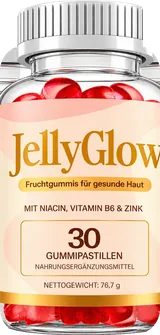
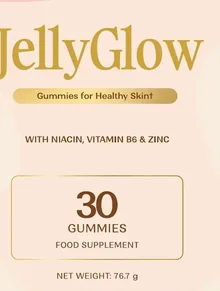
JellyGlow Gummies ingredients include nine named actives per gummy: 25 mg niacin, 2 mg vitamin B6, 1.5 mg zinc, 195 mg maca root extract, 35 mg L-citrulline, 25 mg L-carnitine, and 1–2 mg each of grape seed, Panax ginseng and rhodiola extracts. Every amount is printed on the label, so there is no proprietary blend, and most of each gummy is glucose syrup, water and sugar.
What are the nine JellyGlow Gummies actives?
The label lists three vitamins and minerals with % NRV figures and six plant or amino ingredients without them. Here is the full panel, per one gummy, as printed:
| Active | Per gummy | % NRV | Form on the ingredient list |
|---|---|---|---|
| Niacin (B3) | 25 mg NE | 156% | nicotinamide |
| Vitamin B6 | 2 mg | 143% | pyridoxine hydrochloride |
| Zinc | 1.5 mg | 15% | zinc citrate |
| Maca root 20:1 extract | 195 mg | ** | Lepidium meyenii root extract |
| L-Citrulline | 35 mg | ** | L-citrulline |
| L-Carnitine | 25 mg | ** | L-carnitine |
| Grape seed 20:1 extract | 2 mg | ** | Vitis vinifera seed extract |
| Panax ginseng root 20:1 extract | 2 mg | ** | Panax ginseng root extract |
| Rhodiola rosea root 20:1 extract | 1 mg | ** | Rhodiola rosea root extract |
The label explains "** No NRV established", meaning the EU has no reference value for those six. The NRVs behind the percentages are niacin 16 mg, vitamin B6 1.4 mg and zinc 10 mg1. Our math matches the label: 25 ÷ 16 is 156%, 2 ÷ 1.4 is 143% and 1.5 ÷ 10 is 15%. The same amounts appear on the official JellyGlow sales page2. For the panel line by line, see our nutritional information page.
What is the full JellyGlow Gummies ingredient list?
The label lists 17 ingredients, and EU rules require them in descending order of weight, so the first three make up most of each gummy1. In the label's order:
- glucose syrup
- water
- sugar
- maca (Lepidium meyenii) root 20:1 extract
- gelling agent (pectin)
- acidity regulator (citric acid)
- L-citrulline
- L-carnitine
- nicotinamide
- natural flavours
- colouring food (turmeric concentrate)
- vegetable oil (glazing agent [carnauba wax])
- zinc citrate
- pyridoxine hydrochloride
- Panax ginseng root 20:1 extract
- grape (Vitis vinifera) seed 20:1 extract
- Rhodiola rosea 20:1 root extract
The label gives no calories and no sugar grams per gummy, so we could not confirm either figure. Each gummy weighs about 2.56 g (76.7 g net weight ÷ 30, our math). The gelling agent is pectin, and the seller's badge says "mit Pektin geliert" (set with pectin). The sales page says the product is not labelled vegan and suggests asking the helpdesk about the origin of the raw materials2.
ToolWhat one gummy is made of
One gummy weighs about 2.56 g (76.7 g ÷ 30, our math). Tap a part to see what the label prints. Only the active amounts are printed; the rest has no grams on the label.
This tool needs JavaScript turned on.
What else is in a gummy besides the actives?
Besides the nine actives, the label lists the ingredients that make it a gummy: sweeteners, water, a gelling agent, an acid, flavour, colour and a glaze. These are what you chew, and they outweigh the actives.
Here is what each one is there for, going only by the label's own wording:
- Glucose syrup, water and sugar are the first three ingredients, so by EU ordering rules they are the largest share of each gummy by weight1.
- Pectin is listed as the "gelling agent", the part that sets the gummy.
- Citric acid is listed as an "acidity regulator".
- Natural flavours are printed as such; the label does not name the fruit.
- Turmeric concentrate is listed as a "colouring food". The gummies in the jar photos are red.
- Vegetable oil (carnauba wax) is listed as a "glazing agent", printed as "vegetable oil (glazing agent [carnauba wax])".
The label gives no amounts for any of these, so we could not confirm how much sugar or how many calories one gummy contains. If you track sugar for a medical reason, ask the helpdesk for the figures in writing and check with your doctor or a dietitian.
| Part | Per gummy |
|---|---|
| Maca root extract | 195 mg |
| L-citrulline | 35 mg |
| L-carnitine | 25 mg |
| Niacin | 25 mg |
| Other actives (B6, zinc, grape seed, ginseng, rhodiola) | 8.5 mg |
| Everything else (glucose syrup, water, sugar, pectin and more) | about 2,268 mg, not broken down on the label |
Source: the label. Weights of glucose syrup, sugar and the other base ingredients are not printed, so we do not estimate them.
How much niacin is in JellyGlow Gummies, and in what form?
Each gummy lists 25 mg NE of niacin, 156% of the NRV, and the ingredient list shows the form is nicotinamide. That form matters for side effects.
NIH's Office of Dietary Supplements says nicotinamide does not cause skin flushing and has fewer side effects than nicotinic acid, while 30–50 mg or more of nicotinic acid typically causes flushing3. The U.S. adult upper limit is 35 mg a day and applies to both supplemental forms3. In the EU, EFSA's adult upper limit for nicotinamide is 900 mg a day4, and Germany's BfR suggests a maximum of 160 mg nicotinamide per daily dose in food supplements5. 25 mg is under all of these, but add up niacin from any other supplements you take. More on our niacin page.
Order
JellyGlow Gummies packages and prices
Prices when we checked on November 25, 2026; confirm on the official product page. We do not repeat the page's comparison figures. The buy buttons we checked pointed to a placeholder checkout link, so order links here open the official JellyGlow product page.
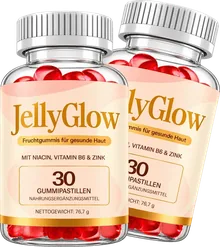
2 jars
60 gummies · about 60 days at one a day
$79per jar, incl. VAT
- Total
- $158
- Per gummy
- $2.63
- Shipping
- $20 shipping
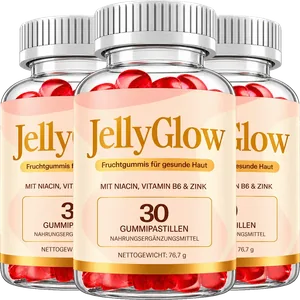
3 jars
90 gummies · about 90 days at one a day
$69per jar, incl. VAT
- Total
- $207
- Per gummy
- $2.30
- Shipping
- Free shipping
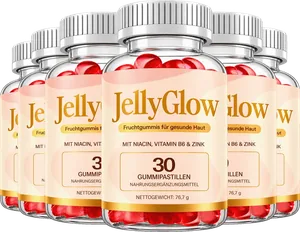
6 jars
180 gummies · about 180 days at one a day
$49per jar, incl. VAT
- Total
- $294
- Per gummy
- $1.63
- Shipping
- Free shipping
- Check the delivery countryThe shipping page names Germany only. Ask the helpdesk first if you live elsewhere.
- Pick a package2, 3 or 6 jars of 30 gummies, with VAT. The 2-jar package adds $20 shipping.
- Pay through Digistore24The seller says it is a one-time payment, no subscription. Read the total before you pay.
- Save the order emailIt holds your order ID. The 30-day guarantee counts from the day the jars arrive.


 Badges supplied by the seller (German originals). What each one means is explained on the guarantee page.
 Card logos come from the seller's pack; the official pages name no payment methods. Order links are marked sponsored. Ask your doctor first if you take medicine.
What do vitamin B6 and zinc add in JellyGlow Gummies?
Vitamin B6 is listed at 2 mg (143% NRV) as pyridoxine hydrochloride, and zinc at 1.5 mg (15% NRV) as zinc citrate.
NIH says vitamin B6 is needed for more than 100 enzyme reactions in the body and that long-term high doses can cause nerve damage; the U.S. upper limit is 100 mg a day6, and the EFSA adult upper limit is 12 mg a day4. For zinc, NIH gives an adult RDA of 8 mg for women and 11 mg for men and a U.S. upper limit of 40 mg a day, and notes zinc can interact with some antibiotics, penicillamine and thiazide diuretics7. The EFSA upper limit is 25 mg a day4. See our zinc page.
What is the maca in JellyGlow Gummies?
Maca root extract is the largest active by far, at 195 mg per gummy. Maca is a root vegetable from the Andes of Peru, related to cabbage and mustard, and has long been eaten as a food8,9.
NCCIH says human evidence on maca is limited to a few small trials and that people with certain medical conditions should consult a doctor8. Another health source notes it is generally considered safe as a food but suggests talking to a provider before taking it as a supplement9. Those sources describe maca on its own, not JellyGlow Gummies, and we found no study of the product. More on our maca root page.
| Ingredient | Per gummy | Amount in the source |
|---|---|---|
| L-citrulline | 35 mg | up to 6,000 mg a day studied for up to 16 days |
| L-carnitine | 25 mg | supplement studies use grams a day |
Sources: NIH Office of Dietary Supplements. The research was on each ingredient alone, not on JellyGlow Gummies.
What do L-citrulline and L-carnitine do in JellyGlow Gummies?
The label lists 35 mg of L-citrulline and 25 mg of L-carnitine per gummy, far below the amounts used in studies of either one.
Citrulline studies described by NIH used up to 9 grams in a day, or 6 grams a day for up to 16 days, and NIH calls the evidence limited and mixed10. That research studied citrulline on its own, at amounts hundreds of times larger than 35 mg, not JellyGlow Gummies. Carnitine helps move long-chain fatty acids into mitochondria, and the liver, kidneys and brain make it; NIH says healthy people make enough, and supplement studies use grams a day11. Neither has an EU-authorised health claim.
How much grape seed, ginseng and rhodiola are in JellyGlow Gummies?
Each gummy lists only 2 mg of grape seed extract, 2 mg of Panax ginseng root extract and 1 mg of rhodiola root extract. These are tiny amounts, far below what the studies NCCIH describes used.
- Grape seed extract comes from the seeds of wine grapes and contains proanthocyanidins. NCCIH says there is very little human research on skin, so the evidence is insufficient12.
- Panax (Asian) ginseng may lower blood sugar, may affect blood clotting and may interact with certain medicines, and its most common side effect is trouble sleeping13. NIH notes it may interact with warfarin and some heart and diabetes medicines10.
- Rhodiola: NCCIH says reliable evidence is insufficient to show it is useful for any health purpose, and it has been reported to interact with losartan, a blood pressure medicine14.
All of this research studied each ingredient on its own, not JellyGlow Gummies. None of these three has an EU-authorised health claim.
Which JellyGlow Gummies ingredients carry an EU health claim?
Only niacin and zinc are tied to skin, hair or nail claims, and vitamin B6 has one other claim; the six plant and amino actives have none. The label prints one sentence: "Niacin contributes to the maintenance of normal skin."
The official sales page adds "Zinc contributes to the maintenance of normal skin", "Zinc contributes to the maintenance of normal hair", "Zinc contributes to the maintenance of normal nails" and "Vitamin B6 contributes to the reduction of tiredness and fatigue"2,15. These describe what each nutrient does in the body, not a visible change from the gummies. See our EU health claims page.
Who should check the JellyGlow Gummies ingredients with a doctor?
Anyone who takes a medication, has a medical condition, is under medical supervision, is under 18, or is pregnant or nursing should ask a doctor or pharmacist first. The label says so, and the ginseng and rhodiola notes above show why medicine interactions are worth asking about. Bring the full ingredient list. Never start, change or stop a medicine because of a supplement.
Frequently asked questions
What is on the JellyGlow Gummies ingredients list, in order?
The ingredients list starts with glucose syrup, water and sugar, then maca root extract, pectin and citric acid. It ends with zinc citrate, pyridoxine hydrochloride and the ginseng, grape seed and rhodiola extracts.
Where does niacin appear on the JellyGlow ingredients list?
Niacin appears ninth on the list, as nicotinamide, and the panel gives 25 mg NE per gummy. NIH says nicotinamide does not cause the skin flushing linked to nicotinic acid.
Is maca the largest active in JellyGlow Gummies?
Yes, maca is the largest active, at 195 mg of maca root 20:1 extract per gummy. Human evidence on maca is limited, and that research studied maca alone, not JellyGlow.
Is there a proprietary blend in JellyGlow Gummies?
No, all nine JellyGlow Gummies ingredients with active amounts are printed one by one. What the label does not print is calories or sugar grams per gummy.
Sources for this page
L = the printed label. D = the seller's pages and Digistore24. S = health, EU and U.S. government sources.
- S12 Regulation (EU) No 1169/2011 on food information to consumers. European Union (EUR-Lex). eur-lex.europa.eu/eli/reg/2011/1169/oj/eng
- D1 JellyGlow official sales page. JellyGlow (jellyglow.site). jellyglow.site
- S1 Niacin: Fact Sheet for Health Professionals. NIH Office of Dietary Supplements. ods.od.nih.gov/factsheets/Niacin-HealthProfessional
- S13 Summary of Tolerable Upper Intake Levels (version 11, August 2025). European Food Safety Authority (EFSA). www.efsa.europa.eu/sites/default/files/2024-05/ul-summary-report.pdf
- S14 Maximum levels for the addition of niacin to foods including food supplements. German Federal Institute for Risk Assessment (BfR). www.bfr.bund.de/cm/349/maximum-levels-for-the-addition-of-niacin-to-foods-including-food-supplements.pdf
- S2 Vitamin B6: Fact Sheet for Consumers. NIH Office of Dietary Supplements. ods.od.nih.gov/factsheets/VitaminB6-Consumer
- S3 Zinc: Fact Sheet for Health Professionals. NIH Office of Dietary Supplements. ods.od.nih.gov/factsheets/Zinc-HealthProfessional
- S9 Maca. Memorial Sloan Kettering Cancer Center, About Herbs. www.mskcc.org/cancer-care/integrative-medicine/herbs/maca
- S10 Is Maca Root Good for You?. Cleveland Clinic. health.clevelandclinic.org/maca-root-benefits
- S5 Dietary Supplements for Exercise and Athletic Performance: Fact Sheet for Consumers. NIH Office of Dietary Supplements. ods.od.nih.gov/factsheets/ExerciseAndAthleticPerformance-Consumer
- S4 Carnitine: Fact Sheet for Health Professionals. NIH Office of Dietary Supplements. ods.od.nih.gov/factsheets/Carnitine-HealthProfessional
- S6 Grape Seed Extract. NIH National Center for Complementary and Integrative Health (NCCIH). www.nccih.nih.gov/health/grape-seed-extract
- S7 Asian Ginseng. NIH National Center for Complementary and Integrative Health (NCCIH). www.nccih.nih.gov/health/asian-ginseng
- S8 Rhodiola. NIH National Center for Complementary and Integrative Health (NCCIH). www.nccih.nih.gov/health/rhodiola
- S11 Commission Regulation (EU) No 432/2012: list of permitted health claims. European Union (EUR-Lex). eur-lex.europa.eu/eli/reg/2012/432/oj/eng
Last updated November 25, 2026. Medical review: Dr. Neera Nathan, MD, Physician. Facts come from the printed label, the seller's pages and the public health and EU sources above; prices were checked November 25, 2026. Spotted an error? Email [email protected].