On this page 10 sections
- How much maca root is in JellyGlow Gummies?
- Where does maca sit in the JellyGlow Gummies ingredient list?
- What does "maca 20:1 extract" mean on the JellyGlow label?
- What is maca, according to the sources?
- What does research say about maca?
- Does the maca in JellyGlow Gummies do anything for skin?
- Why is maca in JellyGlow Gummies?
- Is maca safe, and who should ask a doctor first?
- What maca side effects are known?
- FAQ
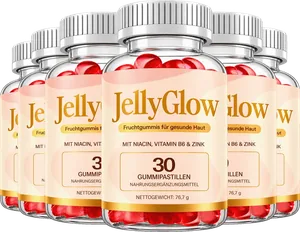
JellyGlow Gummies maca is listed as 195 mg of maca (Lepidium meyenii) root 20:1 extract per gummy, the largest active amount on the label. Maca carries no EU-authorised health claim, and the sources we checked describe it as a food plant with only limited, small human studies, none of them on JellyGlow Gummies.
How much maca root is in JellyGlow Gummies?
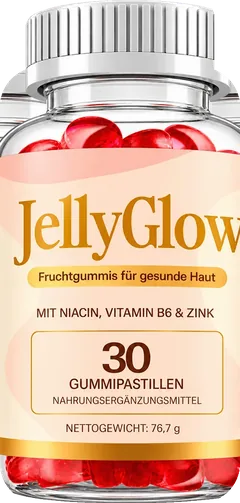
Each gummy lists 195 mg of maca root 20:1 extract, and the suggested use is one gummy a day. The label prints the amount, and the official JellyGlow sales page shows the same figure1.
Maca is by far the biggest of the nine named actives. The table below shows every active on the label, largest first:
| Active (per gummy) | Amount | % NRV |
|---|---|---|
| Maca root 20:1 extract | 195 mg | No NRV established |
| L-citrulline | 35 mg | No NRV established |
| Niacin (as nicotinamide) | 25 mg NE | 156% |
| L-carnitine | 25 mg | No NRV established |
| Vitamin B6 | 2 mg | 143% |
| Grape seed 20:1 extract | 2 mg | No NRV established |
| Panax ginseng root 20:1 extract | 2 mg | No NRV established |
| Zinc | 1.5 mg | 15% |
| Rhodiola rosea root 20:1 extract | 1 mg | No NRV established |
The label marks maca with "**", which it explains as "No NRV established." In plain terms, the EU has no reference amount for maca, so there is no percentage to print. Every amount is printed, so there is no hidden blend. See the full list on our ingredients page.
Where does maca sit in the JellyGlow Gummies ingredient list?
Maca comes fourth in the ingredient list, after glucose syrup, water and sugar. EU labels list ingredients in descending order of weight2, so those three are larger parts of each gummy than maca is.
Each gummy weighs about 2.56 g (76.7 g net weight ÷ 30 gummies, our math). Our math: 195 mg is about 7.6% of that weight. The rest is mostly the sugars, water, pectin and the other listed ingredients, whose amounts the label does not print.
The label gives no calories and no sugar grams per gummy, so we could not confirm those numbers. If you track sugar for health reasons, ask the helpdesk at [email protected] and speak to your doctor.
| Part | Per gummy |
|---|---|
| Maca root extract | 195 mg |
| L-citrulline | 35 mg |
| L-carnitine | 25 mg |
| Niacin | 25 mg |
| Other actives (B6, zinc, grape seed, ginseng, rhodiola) | 8.5 mg |
| Everything else (glucose syrup, water, sugar, pectin and more) | about 2,268 mg, not broken down on the label |
Source: the label. Weights of glucose syrup, sugar and the other base ingredients are not printed, so we do not estimate them.
What does "maca 20:1 extract" mean on the JellyGlow label?
"20:1" is a concentration ratio stated by the maker. It describes how concentrated the extract is compared with the raw root, as the maker reports it.
What we can and cannot say:
- The label states the ratio and the extract weight (195 mg). Both are the seller's figures.
- We could not confirm how the ratio was measured, what solvent or process was used, or how the extract was standardized.
- We do not convert 195 mg into a weight of fresh or dried root. The ratio alone does not tell you how the extract compares with maca eaten as food.
- The same "20:1" ratio appears for grape seed, Panax ginseng and rhodiola on this label.
If you want details on the extract, the sales page says to ask the helpdesk about the origin of raw materials1.
Order
JellyGlow Gummies packages and prices
Prices when we checked on November 25, 2026; confirm on the official product page. We do not repeat the page's comparison figures. The buy buttons we checked pointed to a placeholder checkout link, so order links here open the official JellyGlow product page.
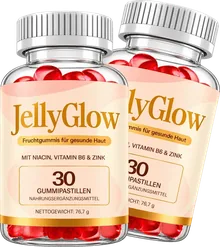
2 jars
60 gummies · about 60 days at one a day
$79per jar, incl. VAT
- Total
- $158
- Per gummy
- $2.63
- Shipping
- $20 shipping
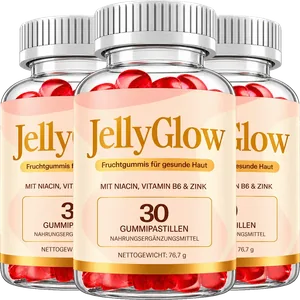
3 jars
90 gummies · about 90 days at one a day
$69per jar, incl. VAT
- Total
- $207
- Per gummy
- $2.30
- Shipping
- Free shipping
6 jars
180 gummies · about 180 days at one a day
$49per jar, incl. VAT
- Total
- $294
- Per gummy
- $1.63
- Shipping
- Free shipping
- Check the delivery countryThe shipping page names Germany only. Ask the helpdesk first if you live elsewhere.
- Pick a package2, 3 or 6 jars of 30 gummies, with VAT. The 2-jar package adds $20 shipping.
- Pay through Digistore24The seller says it is a one-time payment, no subscription. Read the total before you pay.
- Save the order emailIt holds your order ID. The 30-day guarantee counts from the day the jars arrive.


 Badges supplied by the seller (German originals). What each one means is explained on the guarantee page.
 Card logos come from the seller's pack; the official pages name no payment methods. Order links are marked sponsored. Ask your doctor first if you take medicine.
What is maca, according to the sources?
Maca is a root plant grown in the Andes of Peru and eaten as food. Memorial Sloan Kettering Cancer Center (MSK) describes it as a plant related to cabbage that is used as food3, and Cleveland Clinic calls it a root vegetable native to Peru in the mustard family4.
Both sources describe maca's traditional role as a food first. Being a food plant tells you about its history of use; it does not by itself tell you what a concentrated extract in a gummy will or will not do.
What does research say about maca?
Both sources we checked say human research on maca is limited. MSK says the human evidence is limited to a few small trials3, and Cleveland Clinic says human research on supplement claims is limited and many studies are small4.
Keep three points in mind when you see maca claims anywhere:
- Ingredient, not product. Any maca study looked at maca on its own, often at different amounts and preparations. None of it tested JellyGlow Gummies, and we found no study of the product.
- Small and few. Both sources stress that the trials are small3,4.
- No EU claim. Maca has no EU-authorised health claim on this label, so the seller cannot attach approved health wording to it.
Our science page explains how we read ingredient studies and why they do not transfer to a finished gummy.
| Ingredient | What the source says |
|---|---|
| Niacin, B6, zinc | Defined nutrients with reference values, upper limits and EU-authorised claims |
| Maca root | Limited human research, small trials |
| L-citrulline | Limited, mixed evidence at gram amounts |
| L-carnitine | The body makes enough in healthy people |
| Grape seed extract | Skin evidence insufficient |
| Panax ginseng | Small, short trials |
| Rhodiola | Not enough reliable evidence |
Sources: NIH ODS, NCCIH, Memorial Sloan Kettering, Cleveland Clinic, EU Regulation 432/2012. We found no study of JellyGlow Gummies themselves.
Does the maca in JellyGlow Gummies do anything for skin?
We could not confirm any link between maca and skin. Neither MSK nor Cleveland Clinic, the two maca sources we use, describes a skin use, and we found no source on maca and skin.
The only skin wording on the label is the EU niacin sentence: "Niacin contributes to the maintenance of normal skin." The sales page adds EU zinc sentences for skin, hair and nails1. Those sentences are about niacin and zinc, not maca.
The seller says individual results may vary1. You can read the full set of EU wording on our EU health claims page.
Why is maca in JellyGlow Gummies?
The seller does not give a reason we could confirm. The official pages list maca and its amount but do not explain the choice in any way we can support with a source.
What we know for certain:
- Maca is the largest active by weight (195 mg).
- It has no EU-authorised claim.
- The two sources we checked describe limited human research3,4.
If the reason matters to your decision, ask the helpdesk at [email protected]. Do not rely on ad copy you see elsewhere, which may go beyond what the official pages say.
Is maca safe, and who should ask a doctor first?
Cleveland Clinic says maca is generally considered safe as a food, and that you should talk to a provider before taking it as a supplement4. MSK says people with certain cancers, such as breast or uterine cancer, should talk to their provider first, and that maca may not be safe in pregnancy or breastfeeding3.
The label adds its own warnings. It says the product is not for use by anyone under 18 or by pregnant or nursing mothers, and that you should consult a physician before use, especially if you take a medication, have a medical condition or are under medical supervision.
Questions worth bringing to your doctor or pharmacist:
- Is a concentrated maca extract a sensible choice with my health history?
- Does anything I take interact with maca or the other eight ingredients?
- If I have had a cancer, or am being checked for one, should I avoid maca?
Never start, change or stop a medicine because of this page. Your doctor or pharmacist can weigh maca against your full history.
Our safety page gathers every label warning in one place. For the two other root extracts on the label, see Panax ginseng and rhodiola.
What maca side effects are known?
MSK's patient information says side effects have not been reported3. That is not the same as proof that none exist: with only a few small trials, there is little data either way.
If you notice anything unusual after taking JellyGlow Gummies, stop and speak to your doctor or pharmacist, and tell them every ingredient on the label. Remember that maca is one of nine actives, and the gummy also contains sugars, citric acid, turmeric concentrate and other ingredients that could matter to some people.
What can we not confirm about maca in JellyGlow Gummies?
We could not confirm anything beyond the label, the official pages and the two maca sources above. We found no study of the product.
Specifically, we could not confirm:
- how the 20:1 extract was made or standardized;
- where the maca was grown or sourced;
- any outcome from taking the gummies, or any timeline.
If you read this from the United States, note that JellyGlow is sold as an EU "food supplement"5. In the U.S., FDA does not approve dietary supplements for safety and effectiveness before sale6, so JellyGlow Gummies are not FDA approved. We also could not confirm delivery to any country other than Germany, so ask the helpdesk before you order from elsewhere.
The seller says there are no before-and-after photos because the product is new1. For product questions, the official contact is [email protected].
Frequently asked questions
Is maca root the biggest active in JellyGlow Gummies?
Yes: each JellyGlow gummy lists 195 mg of maca root 20:1 extract, the largest active amount on the label. There is no %NRV because the EU has none for maca.
What does maca 20:1 extract mean on the JellyGlow label?
It is a concentration ratio stated by the JellyGlow maker for the extract. We could not confirm how it was measured, so we do not convert it into a root weight.
Why is maca in JellyGlow Gummies?
The official JellyGlow pages do not give a reason we could confirm. Maca has no EU-authorised claim, so ask the helpdesk if the reason matters to you.
Has MSK reported maca side effects relevant to JellyGlow?
MSK's patient information says side effects have not been reported, but the human research is limited to a few small trials3. MSK advises talking to a provider first if you are pregnant, breastfeeding or have a cancer such as breast or uterine cancer.
Sources for this page
L = the printed label. D = the seller's pages and Digistore24. S = health, EU and U.S. government sources.
- D1 JellyGlow official sales page. JellyGlow (jellyglow.site). jellyglow.site
- S12 Regulation (EU) No 1169/2011 on food information to consumers. European Union (EUR-Lex). eur-lex.europa.eu/eli/reg/2011/1169/oj/eng
- S9 Maca. Memorial Sloan Kettering Cancer Center, About Herbs. www.mskcc.org/cancer-care/integrative-medicine/herbs/maca
- S10 Is Maca Root Good for You?. Cleveland Clinic. health.clevelandclinic.org/maca-root-benefits
- S21 Directive 2002/46/EC on food supplements. European Union (EUR-Lex). eur-lex.europa.eu/eli/dir/2002/46/oj/eng
- S15 FDA 101: Dietary Supplements. U.S. Food and Drug Administration. www.fda.gov/consumers/consumer-updates/fda-101-dietary-supplements
Last updated November 25, 2026. Medical review: Dr. Neera Nathan, MD, Physician. Facts come from the printed label, the seller's pages and the public health and EU sources above; prices were checked November 25, 2026. Spotted an error? Email [email protected].