On this page 9 sections
- How much Panax ginseng and rhodiola do JellyGlow Gummies contain?
- What does "20:1 extract" mean on the JellyGlow Gummies label?
- What does NCCIH say about Panax ginseng?
- What does NCCIH say about rhodiola?
- Why are ginseng and rhodiola in a skin gummy at all?
- Can I take JellyGlow Gummies with ginseng if I am pregnant or nursing?
- Do ginseng and rhodiola matter if I take medicines?
- What can we not confirm about ginseng and rhodiola in JellyGlow?
- FAQ
JellyGlow Gummies ginseng and rhodiola come in very small amounts: the label lists 2 mg of Panax ginseng root 20:1 extract and 1 mg of Rhodiola rosea root 20:1 extract in each gummy. Neither herb has an EU-authorized health claim on the label, and the research we describe below looked at each herb on its own, usually at far larger amounts, not at JellyGlow Gummies. We found no study of the product itself.
How much Panax ginseng and rhodiola do JellyGlow Gummies contain?
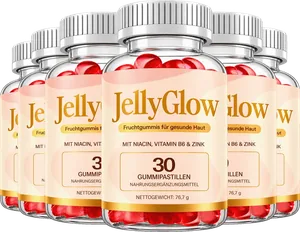
Each JellyGlow gummy contains 2 mg of Panax ginseng root 20:1 extract and 1 mg of Rhodiola rosea root 20:1 extract, according to the label. The official JellyGlow sales page prints the same amounts1.
To put that in context, here is where the two herbs sit among the nine named ingredients on the label:
| Ingredient (label) | Per gummy | EU-authorized claim on label or sales page? |
|---|---|---|
| Maca root 20:1 extract | 195 mg | No |
| L-Citrulline | 35 mg | No |
| L-Carnitine | 25 mg | No |
| Niacin (B3) | 25 mg NE | Yes (skin) |
| Vitamin B6 | 2 mg | Yes (sales page) |
| Grape seed 20:1 extract | 2 mg | No |
| Panax ginseng root 20:1 extract | 2 mg | No |
| Zinc | 1.5 mg | Yes (sales page) |
| Rhodiola rosea root 20:1 extract | 1 mg | No |
Ginseng and rhodiola are among the smallest amounts on the list. In the ingredient list, which EU rules require in descending order of weight, they appear near the very end, after the zinc and vitamin B6 compounds2. Every amount is printed, so there is no proprietary blend hiding a larger dose. You can see the full list on our ingredients page.
What does "20:1 extract" mean on the JellyGlow Gummies label?
A "20:1" figure is a concentration ratio printed by the maker, and we could not confirm what it means for this specific product. The label gives the ratio and the weight of the extract (2 mg and 1 mg), but not how the extract was made, what plant part standard was used beyond "root", or how much of any particular compound it contains.
That matters because you cannot turn "20:1" into a "dried root equivalent" and compare it with a study unless you know how the maker defines it. The safest reading is the plain one: the gummy contains 2 mg of ginseng extract and 1 mg of rhodiola extract. If you need more detail, the official contact is [email protected], and the official pages list no phone number3. Ask in writing and keep the reply.
| Ingredient | What the source says |
|---|---|
| Niacin, B6, zinc | Defined nutrients with reference values, upper limits and EU-authorised claims |
| Maca root | Limited human research, small trials |
| L-citrulline | Limited, mixed evidence at gram amounts |
| L-carnitine | The body makes enough in healthy people |
| Grape seed extract | Skin evidence insufficient |
| Panax ginseng | Small, short trials |
| Rhodiola | Not enough reliable evidence |
Sources: NIH ODS, NCCIH, Memorial Sloan Kettering, Cleveland Clinic, EU Regulation 432/2012. We found no study of JellyGlow Gummies themselves.
What does NCCIH say about Panax ginseng?
The U.S. National Center for Complementary and Integrative Health (NCCIH) describes Panax, or Asian, ginseng root and lists several safety points, all about the herb on its own, not JellyGlow Gummies4. In summary, NCCIH says:
- Insomnia is the most common side effect.
- There are rare reports of severe rash, liver damage and severe allergic reactions.
- Ginseng may worsen autoimmune disorders.
- It may lower blood sugar, so people with diabetes should check with a provider.
- It may interfere with blood clotting.
- It may interact with certain medicines.
- Some studies suggest oral use may be unsafe in pregnancy, and some experts advise against use in pregnancy or breastfeeding.
A separate NIH consumer fact sheet adds that Asian ginseng may interact with warfarin and some heart and diabetes medicines5. These points come from sources that discuss ginseng in general, at the amounts people typically take as an herbal product. We could not confirm whether any of them apply at 2 mg of extract in one gummy, and we did not find a source that says they do not. That is a question for your doctor or pharmacist, not a reason to assume either way.
Order
JellyGlow Gummies packages and prices
Prices when we checked on November 25, 2026; confirm on the official product page. We do not repeat the page's comparison figures. The buy buttons we checked pointed to a placeholder checkout link, so order links here open the official JellyGlow product page.
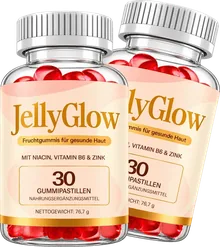
2 jars
60 gummies · about 60 days at one a day
$79per jar, incl. VAT
- Total
- $158
- Per gummy
- $2.63
- Shipping
- $20 shipping
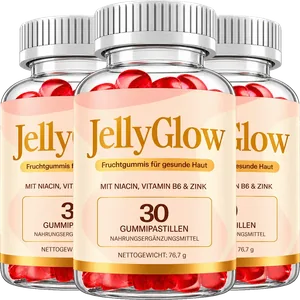
3 jars
90 gummies · about 90 days at one a day
$69per jar, incl. VAT
- Total
- $207
- Per gummy
- $2.30
- Shipping
- Free shipping
6 jars
180 gummies · about 180 days at one a day
$49per jar, incl. VAT
- Total
- $294
- Per gummy
- $1.63
- Shipping
- Free shipping
- Check the delivery countryThe shipping page names Germany only. Ask the helpdesk first if you live elsewhere.
- Pick a package2, 3 or 6 jars of 30 gummies, with VAT. The 2-jar package adds $20 shipping.
- Pay through Digistore24The seller says it is a one-time payment, no subscription. Read the total before you pay.
- Save the order emailIt holds your order ID. The 30-day guarantee counts from the day the jars arrive.


 Badges supplied by the seller (German originals). What each one means is explained on the guarantee page.
 Card logos come from the seller's pack; the official pages name no payment methods. Order links are marked sponsored. Ask your doctor first if you take medicine.
What does NCCIH say about rhodiola?
NCCIH says reliable evidence is insufficient to show that rhodiola is useful for any health purpose, and that most human studies of it are of low-to-moderate quality6. Again, those studies looked at rhodiola on its own, not at JellyGlow Gummies.
On safety, NCCIH reports that short-term use of up to about three months is considered possibly safe, and lists these side effects: dizziness, headache, trouble sleeping, and dry mouth or increased saliva6. It says safety in pregnancy or nursing is unclear, and that rhodiola has been reported to interact with losartan, a blood pressure medicine6.
At 1 mg of extract per gummy, rhodiola is the smallest amount on the JellyGlow label. We could not confirm how that amount compares with the amounts used in the studies NCCIH reviewed, because NCCIH's summary does not give a single comparison figure for this extract. What we can say is that the evidence for rhodiola is described as insufficient for any purpose, so its presence on the label is not evidence of any effect from the gummy.
Why are ginseng and rhodiola in a skin gummy at all?
We could not confirm why the maker chose these two herbs. The front of the label says "Gummies for Healthy Skin†", and the dagger ties that phrase to one sentence only: "Niacin contributes to the maintenance of normal skin." That statement is about niacin, not ginseng or rhodiola.
The EU list of permitted health claims includes wording for niacin and zinc and skin, but neither herb has an authorized claim on this label7. So the only accurate answer is that ginseng and rhodiola are listed ingredients with no approved health statement attached. If the reason they are included matters to you, ask the seller in writing at [email protected]. For a broader view of what the evidence does and does not show for each ingredient, see our science page, and for the other small-dose extract on the label, see grape seed extract.
Can I take JellyGlow Gummies with ginseng if I am pregnant or nursing?
No: the JellyGlow label itself says the product is "Not for use for those under the age of 18 or pregnant or nursing mothers." The official sales page repeats the warning for pregnancy and breastfeeding1.
That label line already settles the question for the product as a whole, before you even look at the herbs. It also lines up with what NCCIH says about each herb: some studies suggest oral ginseng may be unsafe in pregnancy and some experts advise against it during pregnancy or breastfeeding4, and rhodiola's safety in pregnancy or nursing is unclear6. If you are pregnant, planning a pregnancy or nursing, talk to your doctor or midwife about any supplement.
ToolBefore-you-start check
Five yes-or-no questions taken from the label warnings. Answer them to see whether the label asks you to talk to a doctor first, and which questions to bring.
Are you under 18?
Are you pregnant or nursing?
Do you take any medication?
Do you have a medical condition or are you under medical supervision?
Do you take other supplements with niacin, vitamin B6 or zinc?
This tool needs JavaScript turned on.
Do ginseng and rhodiola matter if I take medicines?
Yes, they are worth raising with your pharmacist, because the sources name possible medicine interactions for both herbs on their own. NCCIH says ginseng may interact with certain medicines and may affect blood clotting and blood sugar4; the NIH notes possible interactions with warfarin and some heart and diabetes medicines5; and rhodiola has been reported to interact with losartan6.
We could not confirm whether these interactions happen at 2 mg or 1 mg of extract. The JellyGlow label gives a clear instruction anyway: "Consult with a physician prior to use especially if you are taking a medication, have a medical condition or are under medical supervision." The FDA also says supplements can interact with medicines and advises talking to a health care provider8.
Questions you could bring to your doctor or pharmacist:
- Does 2 mg of Panax ginseng extract matter with the medicines I take now?
- Is there any reason to avoid rhodiola with my blood pressure medicine?
- Do I have an autoimmune condition, diabetes or a clotting issue that changes the advice?
- Should I check any other supplements I take for the same herbs?
Never start, change or stop a medicine because of a supplement. Bring the jar or a photo of the label to the appointment. Our medications page and safety page go through the other label warnings.
The label says JellyGlow Gummies are for adults only and not for pregnant or nursing women. If you take any medicine, the label asks you to consult a physician first.
What can we not confirm about ginseng and rhodiola in JellyGlow?
We could not confirm several details, and we would rather say so than guess. The official pages we checked do not give:
- the origin or supplier of either extract;
- how the 20:1 ratios are defined;
- any testing results for these extracts;
- any study of JellyGlow Gummies, with or without these herbs.
The sales page says individual results may vary and that it shows no before-and-after photos because the product is new1. If you have a specific question about the extracts, email [email protected] and ask for a written answer.
Frequently asked questions
How much Panax ginseng is in each JellyGlow gummy?
The label lists 2 mg of Panax ginseng root 20:1 extract per JellyGlow gummy. That is one of the smallest amounts among the nine named ingredients, and there is no EU-authorized claim for it on the label.
What does NCCIH say about the evidence for JellyGlow rhodiola?
The label lists 1 mg of Rhodiola rosea root 20:1 extract, and NCCIH says reliable evidence is insufficient to show rhodiola is useful for any health purpose, based on studies of the herb alone6.
Does the ginseng in a skin gummy like JellyGlow carry any skin claim?
No: ginseng has no authorized claim on this label7. The "Healthy Skin†" wording is tied only to the niacin sentence, so it says nothing about ginseng.
Does JellyGlow ginseng add a pregnancy concern beyond the label warning?
The label says JellyGlow Gummies are not for pregnant or nursing mothers, so the product is excluded during pregnancy regardless of dose. NCCIH also notes pregnancy concerns about oral ginseng on its own4; talk to your doctor or midwife.
Are rhodiola side effects likely at the 1 mg in JellyGlow Gummies?
We could not confirm whether they are. NCCIH lists dizziness, headache, trouble sleeping, and dry mouth or increased saliva for rhodiola taken on its own6; ask your pharmacist if you have concerns.
Sources for this page
L = the printed label. D = the seller's pages and Digistore24. S = health, EU and U.S. government sources.
- D1 JellyGlow official sales page. JellyGlow (jellyglow.site). jellyglow.site
- S12 Regulation (EU) No 1169/2011 on food information to consumers. European Union (EUR-Lex). eur-lex.europa.eu/eli/reg/2011/1169/oj/eng
- D5 JellyGlow contact page (Kontakt). JellyGlow (jellyglow.site). jellyglow.site/kontakt
- S7 Asian Ginseng. NIH National Center for Complementary and Integrative Health (NCCIH). www.nccih.nih.gov/health/asian-ginseng
- S5 Dietary Supplements for Exercise and Athletic Performance: Fact Sheet for Consumers. NIH Office of Dietary Supplements. ods.od.nih.gov/factsheets/ExerciseAndAthleticPerformance-Consumer
- S8 Rhodiola. NIH National Center for Complementary and Integrative Health (NCCIH). www.nccih.nih.gov/health/rhodiola
- S11 Commission Regulation (EU) No 432/2012: list of permitted health claims. European Union (EUR-Lex). eur-lex.europa.eu/eli/reg/2012/432/oj/eng
- S15 FDA 101: Dietary Supplements. U.S. Food and Drug Administration. www.fda.gov/consumers/consumer-updates/fda-101-dietary-supplements
Last updated November 25, 2026. Medical review: Dr. Neera Nathan, MD, Physician. Facts come from the printed label, the seller's pages and the public health and EU sources above; prices were checked November 25, 2026. Spotted an error? Email [email protected].