On this page 6 sections
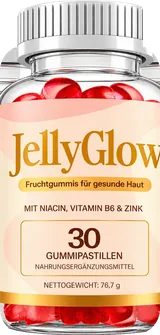
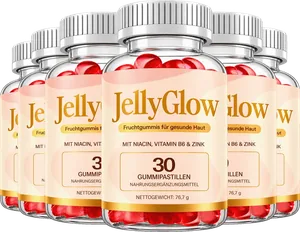
What does 20:1 extract mean? On a label it is a plant-to-extract ratio: roughly 20 parts of starting plant material were used to make 1 part of extract. The JellyGlow Gummies label uses it four times, for maca, grape seed, Panax ginseng and Rhodiola rosea. The ratio is a clue about how the extract was made, and it is not a dose you can convert.
Everything here is general information about extracts. It is not research on JellyGlow Gummies, and we found no study of the product.
What does 20:1 extract mean?
A plant-to-extract ratio compares how much botanical material was used with how much extract came out1. A 20:1 ratio is one way of saying the extract is concentrated compared with the raw plant.
Pharmacopeia authors writing on this topic warn that the ratio can mislead when its meaning is not clearly understood, and that it does not fully describe an extract1. Other things matter too: the quality of the starting material, the solvent, the extraction time and temperature, and any added excipients (carrier ingredients)1.
Think of it like a recipe that gives the ratio of tomatoes to sauce but not the variety of tomato, the pot or the cooking time. Two sauces at 20:1 can still be different sauces.
What does the JellyGlow Gummies label list?
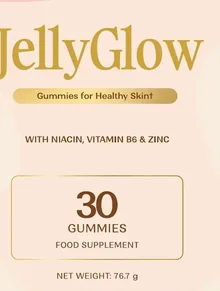
The label prints four extracts at 20:1, each with an amount per gummy.
| Ingredient (label wording) | Listed amount per gummy | What to ask the seller |
|---|---|---|
| Maca (Lepidium meyenii) root 20:1 extract | 195 mg | Which part of the plant, which solvent, any carrier? |
| Grape (Vitis vinifera) seed 20:1 extract | 2 mg | Which solvent, any carrier? |
| Panax ginseng root 20:1 extract | 2 mg | Which solvent, any carrier? |
| Rhodiola rosea 20:1 root extract | 1 mg | Which solvent, any carrier? |
These are listed amounts of the extract itself. Do not multiply them by 20 to get "the plant equivalent". The ratio describes how the extract was made, and the label does not tell us that the ratio holds for the finished amount in a gummy, so any multiplication would be a guess.
We could not confirm the plant source, the solvent or any excipient behind these four lines. Our ingredients page and label guide show how each line appears on the jar.
Order
JellyGlow Gummies packages and prices
Prices when we checked on November 25, 2026; confirm on the official product page. We do not repeat the page's comparison figures. The buy buttons we checked pointed to a placeholder checkout link, so order links here open the official JellyGlow product page.
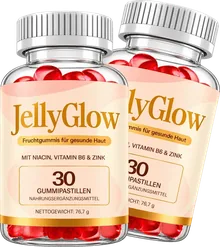
2 jars
60 gummies · about 60 days at one a day
$79per jar, incl. VAT
- Total
- $158
- Per gummy
- $2.63
- Shipping
- $20 shipping
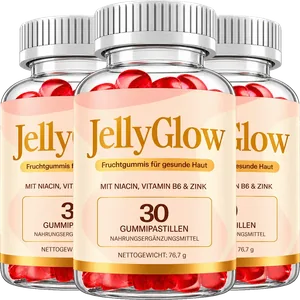
3 jars
90 gummies · about 90 days at one a day
$69per jar, incl. VAT
- Total
- $207
- Per gummy
- $2.30
- Shipping
- Free shipping
6 jars
180 gummies · about 180 days at one a day
$49per jar, incl. VAT
- Total
- $294
- Per gummy
- $1.63
- Shipping
- Free shipping
- Check the delivery countryThe shipping page names Germany only. Ask the helpdesk first if you live elsewhere.
- Pick a package2, 3 or 6 jars of 30 gummies, with VAT. The 2-jar package adds $20 shipping.
- Pay through Digistore24The seller says it is a one-time payment, no subscription. Read the total before you pay.
- Save the order emailIt holds your order ID. The 30-day guarantee counts from the day the jars arrive.


 Badges supplied by the seller (German originals). What each one means is explained on the guarantee page.
 Card logos come from the seller's pack; the official pages name no payment methods. Order links are marked sponsored. Ask your doctor first if you take medicine.
Why can't you turn 20:1 into a studied dose?
Because studies describe their own extracts, and yours may not match. The same authors note that ratios are often used for dose calculations1, which is exactly where the trouble starts: a ratio alone leaves out the factors above, so two products at 20:1 may not carry the same amount of anything in particular.
The research on these four plants is also thin, whatever the ratio.
- Maca: Memorial Sloan Kettering says only a few small human trials exist2. Cleveland Clinic says human research is limited and that many studies had few participants and varied in design, dosage and type of maca3.
- Rhodiola: NCCIH says there is not enough reliable evidence to say it is useful for any health purpose, and that most human research is of low-to-moderate quality4.
- Panax ginseng: NCCIH describes the research as limited, with mostly small trials shorter than three months and mixed results5.
- Grape seed: we did not open a source for this post beyond the label, so we make no statement about its research here.
Those summaries describe each plant on its own, usually at amounts and in forms that differ from one 1 mg or 2 mg line in a gummy. Maca is by far the largest active here at 195 mg; the other three are 1 to 2 mg each. The sources do not give a comparison with the JellyGlow amounts, and we will not invent one.
How can you check an extract claim on any label?
Look for the ratio, the plant part, the amount, and then ask for what the ratio leaves out. This works on any product, not only gummies.
- Find the plant name in Latin and the plant part (root, seed, leaf).
- Note whether the amount is of the extract or of the plant equivalent. On this label it is the extract.
- Ask which solvent and which carriers were used.
- Ask whether a certificate of analysis exists for the batch you will receive.
- Take the list to a pharmacist, especially if you use medicines.
For the JellyGlow label, send those questions to [email protected], the contact on the official pages, and keep the reply. We hold no certificate of analysis and publish no lot numbers.
If you take a prescribed medicine, read our post on JellyGlow and losartan for how we handle medicine questions, then ask your own pharmacist. A pharmacist can check extracts against your medicines, which we cannot do.
Does 20:1 mean a stronger or better gummy?
No. A higher ratio is not a quality score, and "stronger" is not something the ratio can show.
The ratio says how much plant went into the extract. It does not say how much active is in a finished gummy, how the gummy will affect you, or whether any benefit exists. JellyGlow Gummies carry no EU-authorised health claim for maca, ginseng, rhodiola or grape seed, and the label's one printed claim is about niacin. For that, see our explainer on what nicotinamide is and the maca root page.
The seller's own sales page says individual results may vary6. That is a fair reminder when you read any number on a jar.
Frequently asked questions
What does 20:1 extract mean on the JellyGlow Gummies label?
It is a plant-to-extract ratio: about 20 parts of plant material were used for 1 part of extract1. It describes how the extract was made, not how much active ends up in a gummy.
Does 20:1 mean JellyGlow has 20 times more maca per gummy?
No. The label lists 195 mg of maca root extract per gummy, and that listed amount is what you should use. We do not multiply it by 20.
Can I find out which solvent the JellyGlow extracts use?
We could not confirm it from the label or the official pages. Email [email protected] and ask in writing.
Should I ask a pharmacist about the plant extracts in JellyGlow Gummies?
Yes, especially if you take any medicine or have a medical condition. They can read the label against your own situation.
Sources for this page
L = the printed label. D = the seller's pages and Digistore24. S = health, EU and U.S. government sources.
- S22 Understanding plant to extract ratios in botanical extracts. Frontiers in Pharmacology (authors from the U.S. Pharmacopeia), 2022. pmc.ncbi.nlm.nih.gov/articles/PMC9561911
- S9 Maca. Memorial Sloan Kettering Cancer Center, About Herbs. www.mskcc.org/cancer-care/integrative-medicine/herbs/maca
- S10 Is Maca Root Good for You?. Cleveland Clinic. health.clevelandclinic.org/maca-root-benefits
- S8 Rhodiola. NIH National Center for Complementary and Integrative Health (NCCIH). www.nccih.nih.gov/health/rhodiola
- S7 Asian Ginseng. NIH National Center for Complementary and Integrative Health (NCCIH). www.nccih.nih.gov/health/asian-ginseng
- D1 JellyGlow official sales page. JellyGlow (jellyglow.site). jellyglow.site
Last updated November 25, 2026. Medical review: Dr. Neera Nathan, MD, Physician. Facts come from the printed label, the seller's pages and the public health and EU sources above; prices were checked November 25, 2026. Spotted an error? Email [email protected].